
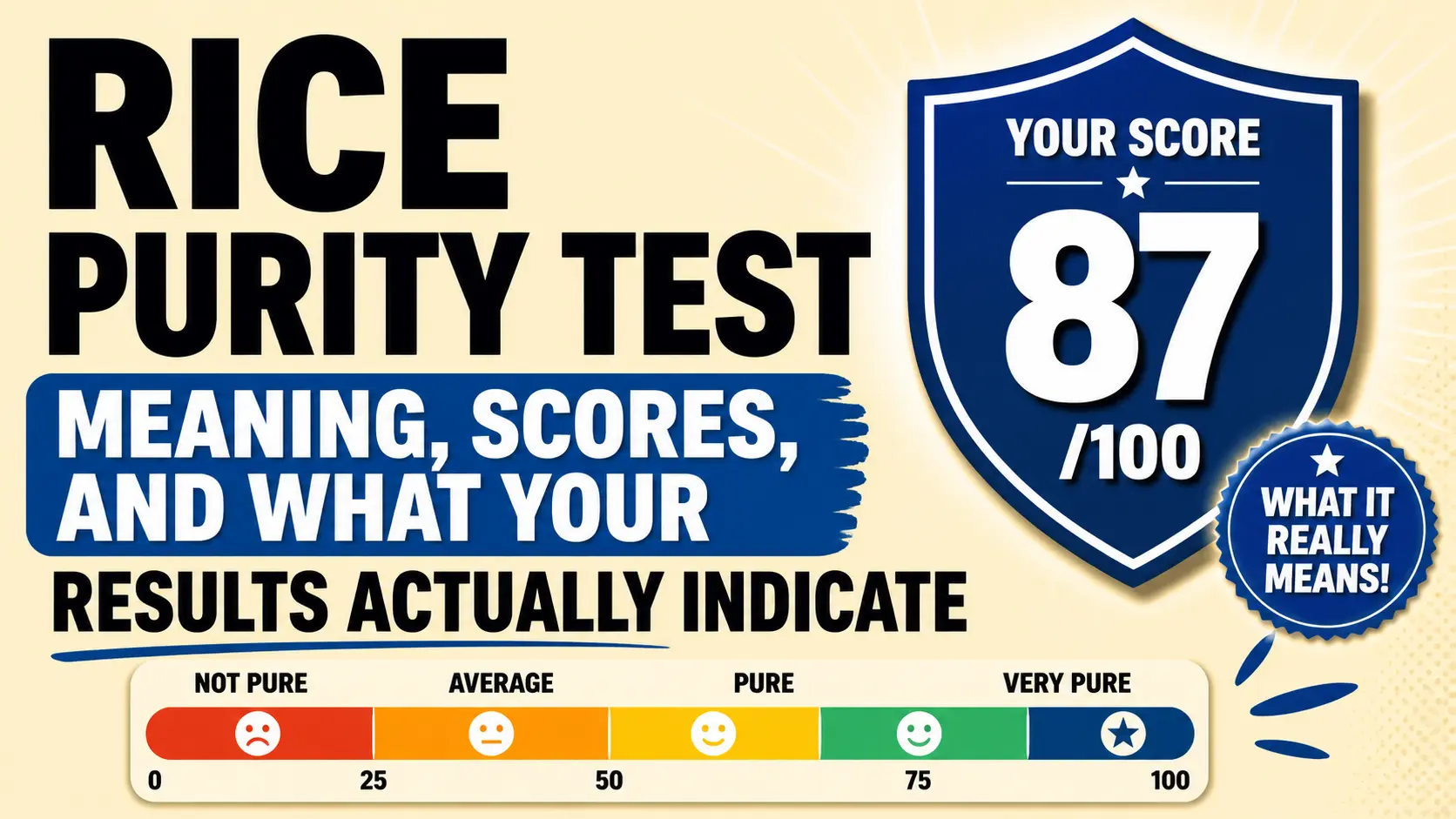
You finished the test, you got a number, and now you’re staring at it wondering what it actually says about you. That’s the part most explanations skip. This page isn’t about what the Rice Purity Test is or how scoring works; it’s about what your specific result actually indicates about your experiences, habits, and where you stand compared to everyone else who’s taken it.
If you haven’t taken the test yet, you can take the Rice Purity Test here first and come back with your score.
What Your Score Range Actually Says About You
Each range below reflects a real pattern in how people answer, not just a number on a chart.
90–100: You’ve Stayed Mostly on the Sidelines
This range usually means you haven’t crossed into most of the romantic, social, or risk-taking experiences the test asks about. It often shows up in younger test-takers, people who are naturally cautious, or anyone who simply hasn’t had the opportunity yet. It says nothing about your character; it says you’re early in that part of your story.
70–89: You’ve Dipped Your Toes In
A score here usually means you’ve had some early social and romantic milestones but haven’t gone much further. This is common among younger teens and anyone who leans more reserved socially. It often indicates someone who’s selective rather than someone who’s missing out.
60–69: You’re Right in Line With Most People
This is the most common range among average test-takers in the USA. Landing here says you’ve had a fairly typical mix of social, romantic, and lifestyle experiences for your age group. There’s no hidden message in this range; it’s simply the middle of the curve.
40–59: You’ve Lived a Fuller Chapter
Scores in this band usually indicate more romantic history, more social risk-taking, and broader life exposure than average. It often shows up in college-age test-takers and people a few years further into adulthood. It doesn’t indicate poor judgment; it indicates more chapters written so far.
Below 40: You’ve Said Yes to a Lot
This range means you’ve checked a large share of the experiences on the list. It’s far more common than people assume, especially among older test-takers. It doesn’t indicate recklessness; it indicates a life with a wide range of experiences behind it.
Want the exact number breakdown instead of ranges? See our full Rice Purity score meaning guide for how every point is calculated.
What a Specific Score Indicates vs. What It Doesn’t
Your result indicates:
- How many of the 100 listed experiences apply to you right now
- Roughly where you sit compared to others who’ve taken the test
- A snapshot of your life at this exact moment, nothing more
Your result does not indicate:
- Your morals, character, or worth
- How “good” or “responsible” you are
- Anything about your future, only your past so far
Curious how your number stacks up against a specific benchmark? Check out is 70 a good score or is 50 a bad score for a closer look at two of the most searched results.
Why the Same Score Can Mean Different Things for Different People
Two people can land on identical scores and have completely different lives behind them. A 65 for an 18-year-old freshman and a 65 for a 30-year-old can come from entirely different sets of checked boxes. Age, environment, culture, and personal circumstances all shape which questions get checked, so the same final number rarely tells the same story twice.
This is why comparing scores with friends is fun, but reading too much into the gap between two numbers usually isn’t useful. The number indicates a pattern, not a ranking of who’s “better.”
What To Do With Your Result
Most people use their score one of three ways:
- As a conversation starter — comparing results with friends or a partner
- As a personal snapshot — a casual way to reflect on this stage of life
- As entertainment — simply curious what the number would be
All three are valid. None of them require you to take the result more seriously than it deserves.
It indicates how many of the 100 listed life experiences apply to you right now, and roughly where that places you compared to other test-takers. It does not indicate your character, morals, or worth.
No. A low score simply means you’ve had more of the experiences on the list. It’s common, especially among older test-takers, and isn’t a sign of poor judgment.
Not necessarily. A high score often reflects being earlier in that part of life, being naturally selective, or simply not having had the opportunity yet. It says nothing negative about you.
Yes. The same final number can come from entirely different checked boxes. Age, background, and circumstances all shape which experiences apply, so identical scores rarely tell identical stories.
You can if it’s fun for you, but treat it lightly. The score reflects personal experience, not a contest, and a higher or lower number than a friend’s doesn’t make either of you better or worse.
Want to see where your number sits nationally? Check the average Rice Purity score in the USA, or head back to the Rice Purity Test to retake it.
